Top Social Content Platforms in Nigeria & Africa in 2026
Nigeria (and most of Africa) won’t have “one winner” in 2026. It’s a stack: short-video platforms dominate discovery, messaging apps dominate distribution, forums dominate controversial breaking chatter, and creator tools + newsletters are quietly becoming the monetization layer. The real opportunity is the missing middle: a structured, searchable, African-first social content platform that turns everyday conversations into durable content people can find again.
That missing middle is exactly where Feedcover fits.
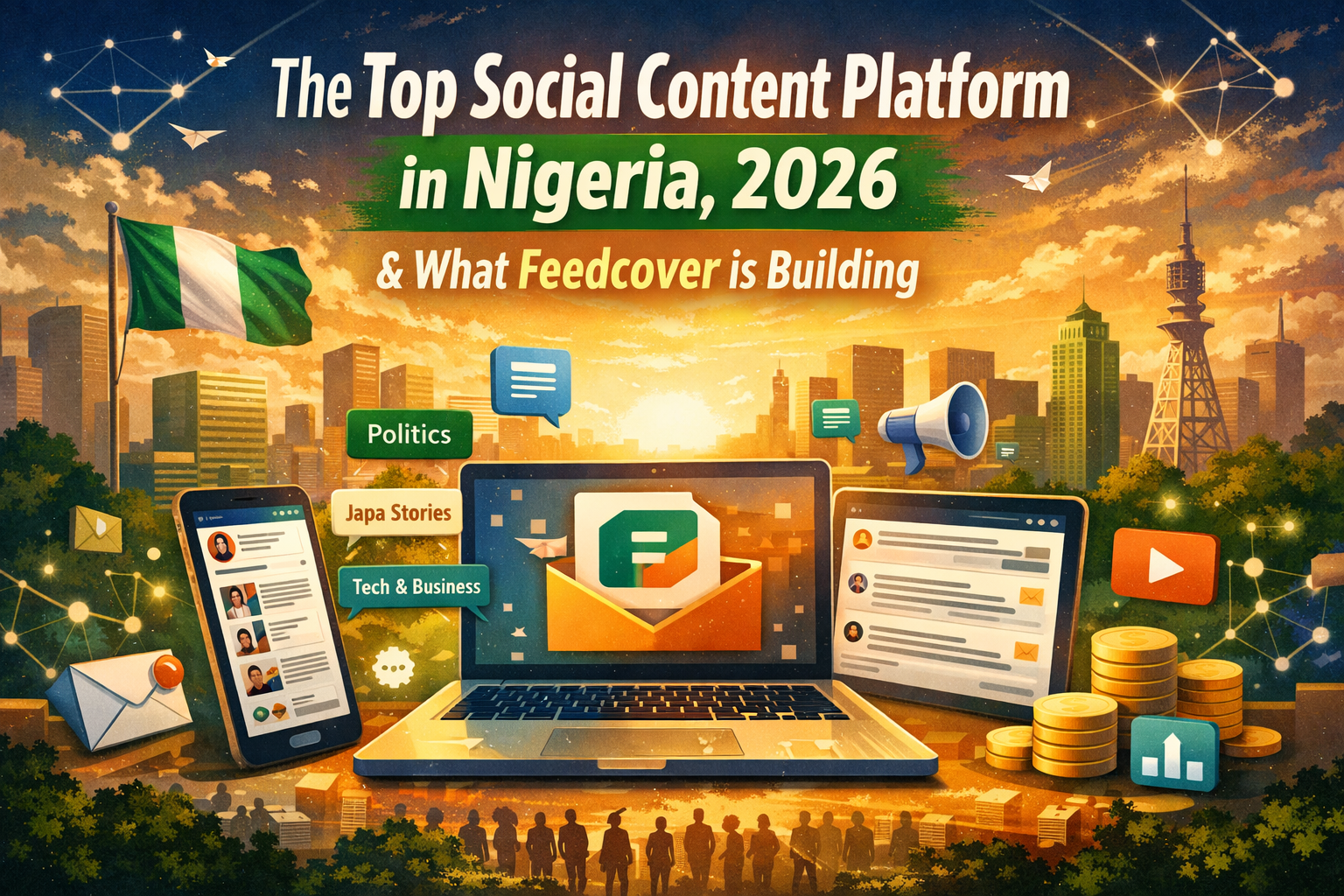
Africa’s social content landscape is entering a new phase.
By 2026, there will be no single platform that “owns” attention across the continent. Instead, attention is spread across short-form video, messaging apps, forums, long-form video, newsletters, and creator blogs. Each serves a different purpose. Each captures a different kind of moment.
What’s changing is not where people post — but what kind of content survives.
A fragmented but powerful ecosystem
Nigeria and Africa already operate one of the most active social ecosystems in the world.
Short-form video platforms dominate discovery. Messaging apps dominate sharing. Forums and social timelines dominate breaking conversations. Long-form platforms build trust and depth.
None of these platforms are failing. In fact, they are all doing exactly what they were designed to do.
The shift happening now is subtler: people want content they can return to, not just react to.
Short-form platforms: unmatched discovery, limited memory
Short-form video platforms have become the fastest way for content to reach new audiences in Africa. Comedy skits, education, street interviews, lifestyle clips, and social commentary travel effortlessly across borders.
What they do extremely well:
-
Fast discovery
-
Low publishing friction
-
High cultural relevance
What they don’t optimize for:
-
Searchability
-
Structured discussion
-
Long-term reference value
Once the moment passes, most content disappears into the scroll.
Messaging apps: where content travels, not where it lives
WhatsApp and Telegram remain Africa’s most important distribution channels.
They are where:
-
links are shared
-
opinions are debated
-
screenshots circulate
-
community conversations happen
But messaging platforms are not public archives. Conversations are fragmented across groups, lost in timelines, and inaccessible to anyone outside those circles.
Africa’s most insightful discussions often happen in private — and then vanish.
Forums and timelines: raw conversation, limited structure
Forum culture has long played a unique role in Nigeria and across Africa. It allows people to speak freely, react quickly, and discuss local issues in detail.
However, most forum-style platforms were built for an earlier internet era:
-
limited personalization
-
weak media integration
-
minimal creator identity
-
poor topic discovery
Social timelines, on the other hand, move fast but lack depth. Threads break apart. Context gets lost. Important ideas are buried under newer posts.
Long-form platforms: depth without mass participation
Long-form video, blogs, and newsletters are where trust is built.
They excel at:
-
explanations
-
analysis
-
storytelling
-
authority
But they demand effort — from creators and from audiences. Not every important idea deserves a 30-minute video or a 2,000-word essay. Many conversations sit in between: too important for a comment, too informal for a full article.
This middle layer has largely been ignored.
The missing layer: structured social content
What Africa’s content ecosystem lacks is not more platforms — but structure.
Specifically:
-
public conversations that remain discoverable
-
discussions organized by topic, not timeline
-
content that accumulates over time instead of resetting daily
-
local context that doesn’t get diluted or buried
Globally, there is growing demand for platforms that sit between social feeds and traditional publishing. Platforms that treat conversations as content — and content as something worth organizing.
This is where structured social publishing emerges.
What structured social publishing looks like
Structured social publishing combines:
-
categories that reflect how people actually think
-
tags that group related conversations
-
recurring content series
-
public profiles tied to ideas, not just posts
-
searchable archives that grow over time
Instead of asking “what’s trending now?”, it answers:
-
where is the best discussion on this topic?
-
what has already been said?
-
who consistently writes about this?
This model favors clarity over noise.
Where Feedcover fits into this shift
Feedcover is being built around this exact idea: turning African conversations into structured, searchable, long-lasting content.
Rather than competing with short-form or messaging platforms, Feedcover focuses on what those platforms leave behind:
-
organized discussions
-
topic-based discovery
-
recurring story series
-
public knowledge trails tied to local context
Posts are not treated as disposable updates. They are treated as entries in a growing public archive — one that reflects African realities, interests, and conversations.
Built around how Nigerians actually talk
Feedcover’s structure reflects real Nigerian and African discussion patterns:
-
politics and governance
-
crime and safety
-
jobs and careers
-
business and SMEs
-
diaspora and migration
-
technology and startups
-
relationships, family, and lifestyle
-
sports and culture
These are not abstract categories. They are the topics people return to daily — across platforms — without a single place where conversations are properly organized and preserved.
Why this matters long-term
As Africa’s internet population grows, so does content volume. The challenge is no longer expression — it is retrieval.
The platforms that matter most in the next phase will not just help people speak. They will help people:
-
find context
-
follow ideas over time
-
discover credible voices
-
revisit discussions that still matter
Structured social content makes this possible.
Looking ahead to 2026
By 2026, Africa’s social ecosystem will remain diverse and decentralized. Short-form video will continue to dominate discovery. Messaging apps will remain essential for sharing. Long-form platforms will keep building trust.
Alongside them, structured social platforms will quietly grow — not by competing for attention, but by organizing it.
Feedcover is part of this shift: not replacing existing platforms, but giving African conversations a place to live, grow, and remain accessible long after the moment has passed.